
8 Applications for Precision CNC Machined Parts
Modern industries demand compact, high-precision components that traditional manufacturing often cannot deliver. This gap leads to design limitations, delays, and performance risks. CNC machining offers a precise, reliable, and cost-effective solution. It enables fast production of complex geometries with consistent results, making it essential across industries.
Precision CNC machined parts are custom-manufactured components produced with tight tolerances using computer-controlled machines. These parts are widely used in electronics, medical, aerospace, automotive, and robotics. CNC machining ensures repeatability, accuracy, and material flexibility, making it suitable for both prototypes and low-volume production.
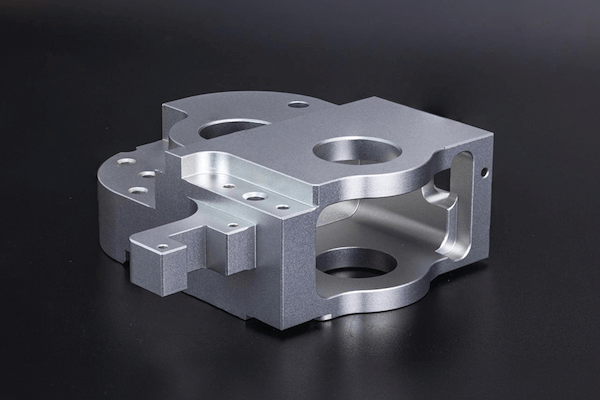
1. Electronics & IoT Devices
The electronics industry demands compact, high-precision components that support both performance and miniaturization.
CNC machining enables the production of tight-tolerance parts such as aluminum enclosures, RF connectors, and custom IoT housings.
These components require dimensional accuracy to ensure proper heat dissipation, electrical contact, and mechanical integration.
CNC machined electronics parts support rapid product development.
Design teams can iterate quickly and produce prototypes within days instead of weeks.
This agility allows manufacturers to validate new features without waiting for mold fabrication.
In particular, aluminum enclosures are commonly used to house circuit boards, sensors, and microprocessors.
They offer lightweight protection, high conductivity, and excellent heat transfer.
Black anodizing enhances corrosion resistance while providing a professional appearance.
RF connectors and terminals must maintain signal integrity in compact layouts.
CNC machining ensures precise geometry, reducing interference and signal loss.
These parts are typically made from brass or copper, which provide strong electrical performance and are easy to machine.
IoT devices often include plastic housings made from polycarbonate or PC blends.
These materials offer insulation, impact resistance, and are ideal for CNC milling in small volumes.
CNC machining delivers precision, speed, and flexibility, making it the preferred method for developing and producing modern electronic and IoT components.
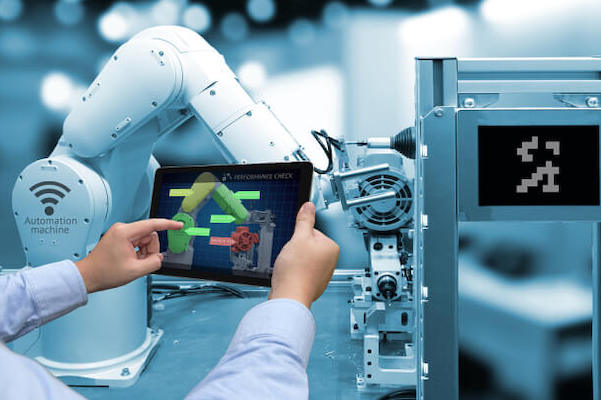
2. Medical Equipment Components
The medical industry relies on CNC precision machining to manufacture components that demand strict tolerances, cleanliness, and regulatory compliance.
From surgical tool handles to diagnostic housings and drug delivery devices, CNC machining provides unmatched consistency and control.
These CNC medical components must be produced using ISO 13485–compatible materials.
Stainless steel, titanium, and certain medical-grade plastics are commonly selected for their biocompatibility and durability.
CNC machining ensures that these materials are shaped accurately, without introducing stress or contamination.
Surgical precision parts often feature ergonomic shapes and fine surface finishes.
Machined handles, grips, or instrument shafts must fit seamlessly in the surgeon’s hand while maintaining hygiene and sterilization requirements.
CNC provides smooth, burr-free edges that reduce bacterial accumulation and enhance safety.
Diagnostic equipment housings must align precisely with sensors, cables, and user interfaces.
CNC ensures tight fits and repeatable assembly, even in small batches or prototype runs.
Cleanroom-ready production is often necessary in medical applications.
CNC machining minimizes contact, supports automation, and allows for validated cleaning protocols.
Full documentation and traceability of material batches and process steps are essential for audit compliance.
As healthcare technology continues to evolve, CNC machining remains vital for producing safe, high-performance medical components that meet global quality standards.
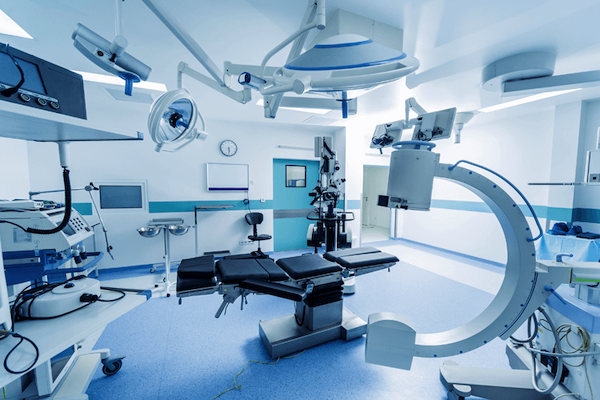
3. Aerospace Structural Parts
CNC aerospace machining plays a crucial role in producing high-precision structural components used in aircraft, satellites, and drones.
These parts must be lightweight, strong, and dimensionally stable, even under extreme conditions.
Lightweight CNC brackets, sensor housings, and mounting frames are commonly made from aerospace-grade materials such as aluminum 7075 and titanium alloys.
These metals offer high strength-to-weight ratios, making them ideal for applications where every gram matters.
CNC machining delivers the accuracy required for tight-fitting assemblies.
Whether mounting avionics or stabilizing moving parts, brackets must align perfectly to maintain structural integrity and flight performance.
Even minor deviations can lead to vibration, wear, or system failure over time.
Aluminum 7075 provides superior mechanical properties and excellent machinability.
It is widely used for internal structural supports and critical load-bearing components.
Titanium offers excellent corrosion resistance and is preferred for parts exposed to heat, pressure, or aggressive environments.
In aerospace manufacturing, traceability and repeatability are critical.
CNC machines ensure consistent dimensional control, while digital records document every step of production.
Overall, CNC machining provides the reliability, precision, and material flexibility required for aerospace innovation.
It allows engineers to turn lightweight designs into robust, flight-ready components that meet strict safety standards.

Ready to Get Started?
Need help with Precision CNC Machined Parts? Contact RALLY today for expert guidance and a free consultation!
4. Automotive Prototyping & Custom Parts
The automotive industry thrives on rapid innovation and precise engineering.
CNC prototype machining plays a vital role by enabling manufacturers to test, refine, and validate designs before mass production begins.
Typical components include transmission housings, engine blocks, and dashboard prototypes, all requiring strict dimensional accuracy.
CNC automotive parts are ideal for low-volume production, especially during R&D phases or pre-launch testing.
Engineers can make real-time design changes without waiting for injection molds or casting tools.
This flexibility allows faster response to performance data, reducing time to market.
Aluminum alloys are often used for engine or gearbox prototypes due to their machinability and heat resistance.
CNC ensures clean surfaces, tight tolerances, and compatibility with existing mounting systems.
For interior components such as dashboards or control panels, CNC machining supports various plastic materials, including PC, ABS, and acrylic.
These materials offer excellent surface finish and can simulate the final look and feel of production parts.
In electric and specialty vehicles, production runs are often smaller.
CNC supports custom parts with high repeatability, even in batches of 10 to 500 units.
By supporting both speed and precision, CNC machining empowers automotive engineers to innovate efficiently and cost-effectively.
It remains essential for transforming early-stage designs into functional, testable components.

5. Industrial Machinery & Automation
Modern industrial systems rely on durable, high-precision components to ensure efficiency and safety.
CNC machined machine parts such as support brackets, precision shafts, and clamping elements are essential in both automated production lines and heavy-duty equipment.
These parts must endure continuous mechanical stress, thermal expansion, and vibration.
Stainless steel and carbon steel are frequently selected for their strength, corrosion resistance, and long service life.
CNC machining guarantees that each component maintains the required dimensions and surface finishes—even under tough operating conditions.
In automation systems, accuracy is critical.
Custom automation components like alignment fixtures, robotic end effectors, or linear motion guides must integrate seamlessly with sensors and actuators.
CNC machining ensures positional accuracy and reliable mechanical performance, even in high-speed environments.
Brackets support motors, cylinders, and tooling assemblies.
Any misalignment can cause instability, reduce precision, and increase maintenance costs.
CNC offers consistent repeatability across batches, ensuring that each bracket performs as intended.
Clamps and couplings must also resist torque, impact, and wear.
CNC precision helps manufacturers maintain part integrity under demanding conditions.
As industries automate further, the need for custom-machined solutions continues to grow.
CNC machining provides the strength, precision, and flexibility required to keep industrial systems running smoothly and reliably.

6. Optical Systems & Sensor Fixtures
Optical assemblies and precision sensors require exceptionally accurate mechanical components to maintain alignment, focus, and stability.
CNC machining plays a key role in producing lens holders, optical frames, and alignment jigs that meet these tight requirements.
Precision optical fixtures demand flawless dimensional control.
Even a deviation of a few microns can cause misalignment, distortion, or reduced image clarity.
CNC machining ensures each feature—whether a bore, flat surface, or slot—meets exact tolerances and maintains parallelism and perpendicularity.
Many optical applications require parts to hold delicate lenses, mirrors, or filters in fixed positions.
These CNC sensor mounts must resist vibration, temperature changes, and mechanical stress without shifting.
Machined aluminum and stainless steel are commonly used for their dimensional stability and thermal behavior.
For prototyping or small-batch production, CNC machining enables fast delivery and consistent quality.
This is especially important for custom optics used in medical devices, metrology systems, or industrial cameras.
CNC also supports complex geometries and internal cutouts needed for precise light paths.
Designers can incorporate critical features directly into the part, reducing assembly complexity and alignment errors.
CNC machining is indispensable in the optical field.
It provides the precision, repeatability, and material control required for high-performance optical and sensor-based systems.
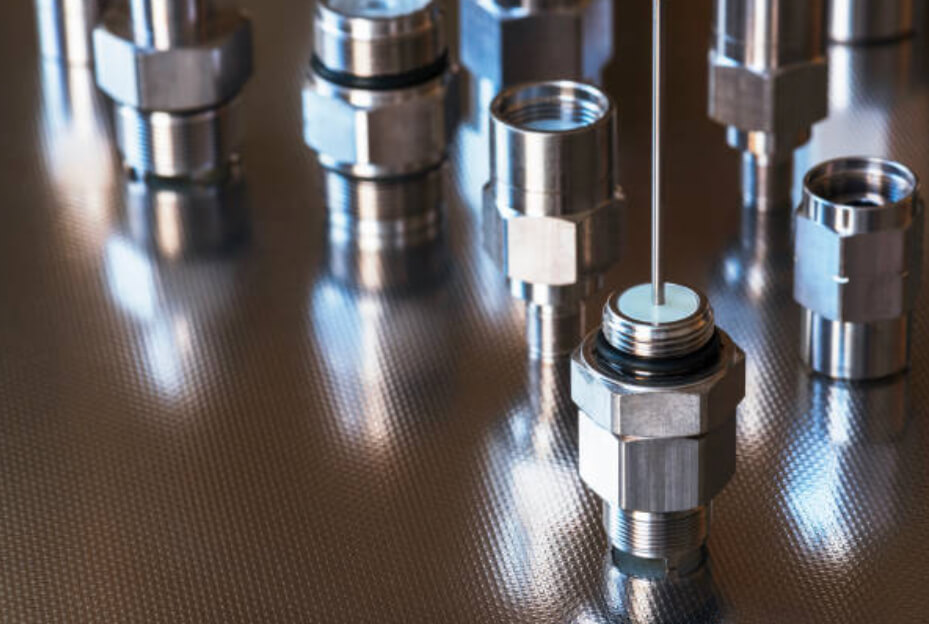
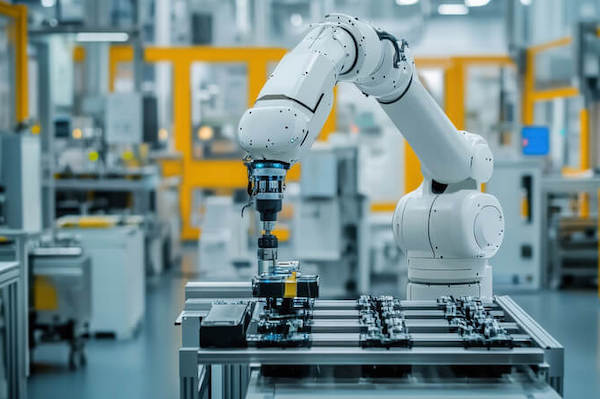
7. Robotics & Mechatronics Components
Precision and stability are critical in robotic systems and mechatronic assemblies.
Even the smallest mechanical error can disrupt motion control, reduce accuracy, or damage sensitive parts.
CNC machining ensures exact tolerances in components such as couplings, servo motor mounts, and articulated arm joints.
These CNC robot parts often require complex geometries and tight mechanical fits.
Misalignment or backlash in motion components can degrade performance and create safety risks.
CNC offers the consistency and repeatability necessary to produce parts that operate smoothly under load.
Machined motion components must also support various materials.
Metal parts like aluminum or steel offer strength for load-bearing joints and rigid frames.
Plastic parts—such as POM or nylon—provide flexibility, wear resistance, and noise reduction in dynamic mechanisms.
Servo motor mounts demand accurate hole placement and parallel surfaces to prevent torque misalignment.
Articulated arm segments require symmetrical shapes and uniform weight for balanced movement.
CNC machining supports both prototyping and low-volume production for robotic systems.
This is essential in automation R&D, where designs change frequently and performance must be validated quickly.
With CNC, engineers can integrate features such as cable channels or sensor slots directly into the part.
This reduces assembly complexity and improves reliability.
Ultimately, CNC machining delivers the precision, versatility, and material control needed to build advanced robotic solutions.
8. Telecommunications & RF Modules
Telecom and RF systems require mechanical components that support signal integrity, shielding, and thermal control.
CNC machining plays a key role in producing waveguide flanges, antenna housings, and EMI shielding enclosures with exacting precision.
In high-frequency environments, conductivity and surface finish are critical.
Even slight imperfections can cause signal loss, reflection, or interference.
CNC machining ensures tight tolerances, smooth surfaces, and consistent material flow—all essential for RF performance.
CNC RF components often include threaded ports, mating surfaces, or cavity structures that must align perfectly.
Misalignment can introduce impedance mismatch or degrade system reliability.
CNC guarantees repeatability across both prototypes and small production runs.
Brass, copper, and aluminum are the preferred materials for these parts.
Copper offers excellent electrical conductivity and is ideal for signal paths and grounding.
Brass balances machinability with good RF performance.
Aluminum provides lightweight shielding and effective heat dissipation, especially when anodized or plated.
Machined communication parts may also integrate mounting holes, gaskets, or internal slots for PCBs and coaxial connectors.
By combining mechanical and electrical features in one part, CNC helps reduce assembly time and improve consistency.
CNC machining offers the accuracy, material control, and surface quality needed to meet the demands of modern RF and telecom systems.

Conclusion
Precision CNC machined parts are essential across today’s most advanced industries.
From robotics to medical devices, RF modules to automotive prototypes, CNC machining delivers the accuracy, repeatability, and flexibility needed to turn complex ideas into functional products.
It supports a wide range of materials and part geometries while maintaining tight tolerances at every stage.
At RALLY, we specialize in producing high-quality CNC parts tailored to your specific application.
With 15+ years of machining expertise and global project experience, we help engineers and buyers meet tight deadlines and performance goals.
Upload your drawings today and contact us to get a quote.
Let RALLY be your trusted partner for precision CNC manufacturing — no matter your industry.
Get A Quick Quote For Your New Project !
Our expert team and advanced manufacturing capabilities are ready to support your project from prototype to mass production. Contact us now to get started!
Related Posts

Why CNC Machining in China is Your Best Option

The Ultimate Guide to Machining Teflon

Methods of Custom Wireless Charging Aluminum Enclosure

 English
 German
 Portuguese
 French
 Polish
 Spanish
 Italian