
CNC Rapid Prototyping: Accelerating Product Development with Precision
Introduction
When developing a new product, CNC rapid prototyping offers a solution to one of the biggest challenges: testing and refining designs quickly. Whether you’re working on a complex automotive part or a small consumer product, getting your prototype right before mass production is crucial.
Traditional prototyping methods can be slow and costly, often leading to delays in product development. CNC prototyping, however, allows you to create precise, functional prototypes faster and at a lower cost. This helps you identify potential design flaws early, enabling you to make adjustments before committing to large-scale production.
With rapid prototyping, you can reduce time-to-market and improve your final product's quality, all while staying within budget. This is the key to keeping up with today’s fast-paced manufacturing and design environments.
1. What is CNC Rapid Prototyping?
CNC rapid prototyping is a manufacturing process that uses computer-controlled machines to create precise, functional prototypes. Unlike traditional prototyping methods, which often involve handcrafting or molding, CNC technology utilizes a subtractive process where material is removed from a solid block to shape the part.
With CNC, designs are fed into the machine as digital files, which guide the machine to carve out the part layer by layer. This level of precision is difficult to achieve with traditional methods like molding or casting, which may require more manual labor and take longer.
Moreover, CNC prototyping is often faster, more efficient, and cost-effective for short-run production.
In comparison to traditional methods, CNC prototyping offers faster turnaround times, the ability to work with a wide range of materials, and the production of high-precision parts in less time. These advantages make it an attractive solution for industries that require fast and accurate prototypes, such as aerospace, automotive, and medical device manufacturing.

2. Application areas of CNC prototyping
CNC prototyping has a wide range of applications across various industries due to its precision and speed. In the automotive industry, it is used to create functional parts for testing and development, such as engine components and interior elements. This helps manufacturers refine designs and ensure the quality of their products before mass production.
In medical device manufacturing, CNC prototyping allows for the creation of intricate, custom parts like surgical instruments, implants, and prosthetics. The ability to quickly test and iterate designs is essential in the fast-evolving medical field.
The aerospace industry also benefits from CNC prototyping by producing lightweight, high-strength parts with complex geometries. This helps to reduce weight and improve the performance of aircraft and spacecraft components.
For electronics, CNC prototyping is used to create enclosures, connectors, and other small components. It allows designers to test the fit and functionality of electronic parts before moving to full-scale production.
These applications highlight the versatility and efficiency of CNC prototyping in industries that require high precision and quick iteration.

3. Advantages of CNC prototyping
CNC prototyping offers several significant advantages that make it an essential tool for modern manufacturing. First, it provides high precision that is difficult to achieve with traditional methods. CNC machines can create parts with tight tolerances and intricate details, ensuring a high level of accuracy in prototypes.
Another advantage is material versatility. CNC prototyping can work with a wide range of materials, including metals, plastics, and composites. This allows manufacturers to choose the best material for each specific application, whether it’s for strength, flexibility, or durability.
In addition, rapid delivery is a key benefit. CNC machines can quickly produce prototypes, reducing the time it takes to test and iterate designs. This accelerates the development cycle and allows companies to make adjustments sooner.
By using CNC prototyping, designers can identify and correct design flaws early in the process. This reduces the risk of costly mistakes during mass production, helping to avoid delays and ensure product quality. Ultimately, CNC prototyping enables faster product development and lowers overall costs, making it a valuable tool for companies in various industries.
Ready to Get Started?
Need help with CNC Prototyping ? Contact RALLY today for expert guidance and a free consultation!
4. Common Materials for CNC Prototyping
CNC prototyping can utilize a wide range of materials, each offering unique properties suited for different applications. Below are some common materials used in CNC rapid prototyping:
Aluminum
Aluminum is a popular choice for CNC prototyping due to its lightweight, high strength, and corrosion resistance. It is often used in industries such as aerospace and automotive for producing functional prototypes and end-use parts.
Stainless steel
Stainless steel is known for its strength, durability, and resistance to corrosion. It is commonly used in industries where parts need to withstand harsh environments, such as medical devices, aerospace, and automotive applications.
Plastics (ABS, Nylon, PEEK)
Plastics are widely used in CNC rapid prototyping for parts that need to be lightweight and cost-effective. ABS is commonly used for prototypes that require durability and impact resistance, while Nylon offers flexibility and wear resistance.
PEEK is a high-performance plastic used in demanding applications like aerospace and medical devices due to its high temperature and chemical resistance.
Titanium
Titanium is a high-strength, lightweight material often used for aerospace, medical, and automotive applications. It offers excellent resistance to corrosion and is ideal for parts that require high strength-to-weight ratios.
Copper and Brass
Both copper and brass are used for parts requiring excellent electrical conductivity or aesthetic appeal. They are commonly used in electronics, plumbing, and decorative applications.

5. CNC Rapid Prototyping vs. 3D Printing
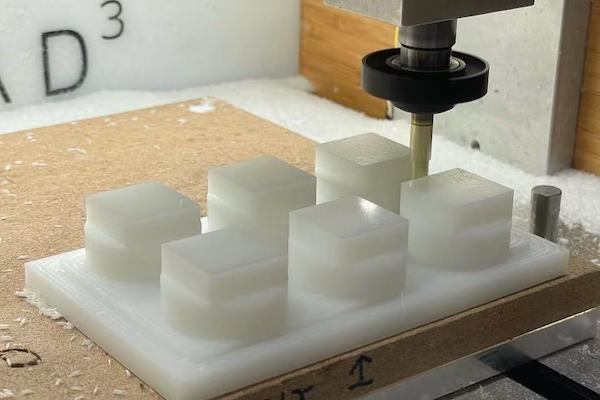
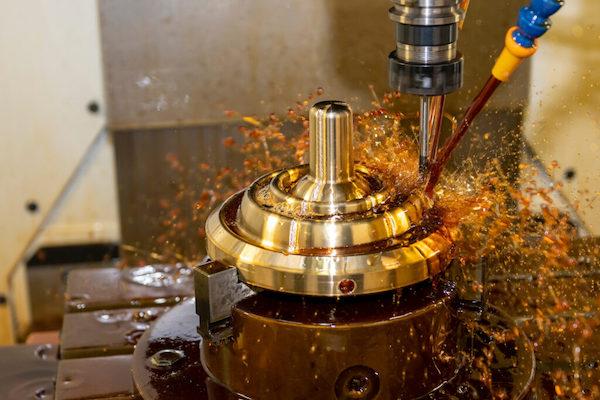
CNC rapid prototyping and 3D printing are both widely used for creating prototypes, but they differ significantly in their processes and applications. CNC rapid prototyping uses a subtractive method, where material is removed from a solid block, providing high precision and the ability to work with a wide range of materials. It is ideal for producing parts with tight tolerances and fine details.
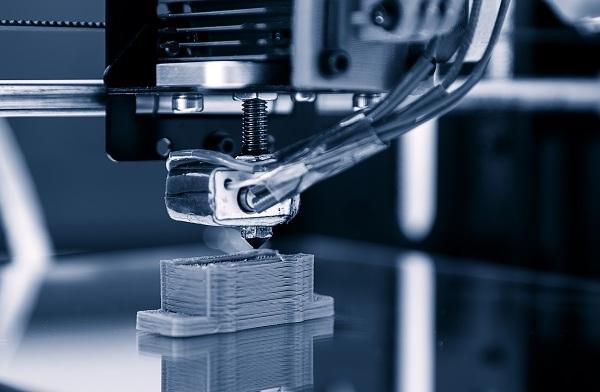
On the other hand, 3D printing is an additive process, where material is built up layer by layer. While 3D printing is more flexible in design and faster for creating complex shapes, it typically lacks the same level of precision and material strength as CNC. Both technologies offer unique benefits depending on the project's requirements.
| Feature | CNC Rapid Prototyping | 3D Printing |
|---|---|---|
| Manufacturing Method | Subtractive (material removal) | Additive (layer-by-layer build-up) |
| Precision | High precision, tight tolerances | Lower precision compared to CNC |
| Material Options | Metals, plastics, composites | Mainly plastics and resins |
| Speed | Faster for high-precision parts | Faster for complex designs |
| Cost | Higher for complex parts | Lower for low-volume, complex parts |
| Best for | Functional parts with tight tolerances | Complex geometries and prototypes |

6. RALLY's CNC Prototyping Service
RALLY offers CNC prototyping services that combine precision, speed, and material versatility to meet the needs of modern product development.
By utilizing advanced CNC technology, RALLY can create high-precision prototypes in a wide range of materials, including metals, plastics, and composites. This ensures that prototypes are not only accurate but also functional for real-world testing.
With RALLY's rapid prototyping services, clients can reduce development time and minimize costly design errors. The ability to quickly iterate and refine designs helps businesses stay ahead in competitive markets.
For example, a recent client in the automotive industry required a series of high-tolerance prototypes for engine components. RALLY delivered the parts on time, allowing the client to perform thorough testing and reduce time-to-market.
RALLY’s commitment to quality and efficiency is evident in customer feedback, with many clients praising the speed and precision of the prototypes. By choosing RALLY, companies can confidently move from design to testing and production with reliable, high-quality prototypes.

Conclusion
In conclusion, CNC rapid prototyping is a powerful tool that accelerates product development, improves design accuracy, and reduces costs. By leveraging advanced CNC technology, RALLY provides fast, precise, and cost-effective solutions for a wide range of industries.
Whether you're working in automotive, aerospace, medical, or electronics, RALLY’s CNC rapid prototyping services can help you bring your ideas to life.
Don’t let slow prototyping delay your project. Contact RALLY today to discuss how our CNC rapid prototyping services can streamline your product development and bring your prototypes to market faster. Reach out for a quote or consultation now!
General Questions:
Get A Quick Quote For Your New Project !
Our expert team and advanced manufacturing capabilities are ready to support your project from prototype to mass production. Contact us now to get started!
Related Posts

Looking for a CNC Milling Partner for Custom Aluminum Enclosures

A Guide to Acrylic CNC Machining: Techniques, Tips, and Tools

Medical CNC Turning: Find Precision Solution and Supplier

 English
 German
 Portuguese
 French
 Polish
 Spanish
 Italian