
Which Bicycle Parts Are Commonly Made with CNC Machining?
Standard bicycle parts often suffer from poor fit, weak durability, or inconsistent aesthetics. Over time, these flaws can lead to performance issues, rider discomfort, and frequent replacements. Especially in high-stress zones like cranks, hubs, and stems, minor imperfections quickly escalate into functional failures. Riders and manufacturers demand components with tighter tolerances, better finishes, and longer life cycles. That’s where CNC bicycle parts come in. CNC machining offers unmatched precision, excellent material control, and high repeatability. It ensures each part fits perfectly and performs reliably—even under extreme riding conditions.
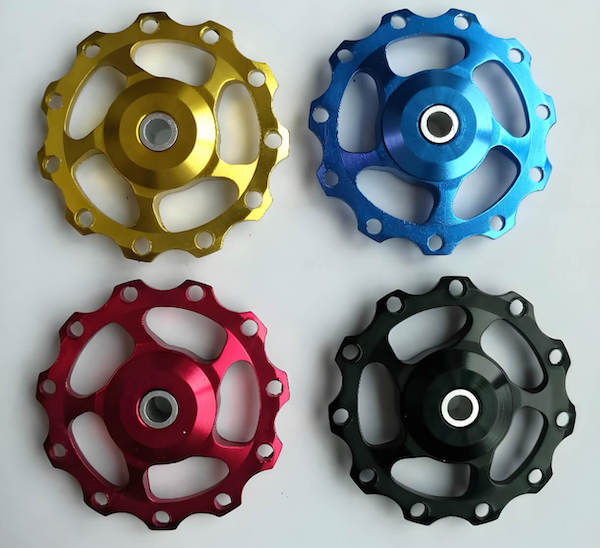
CNC machining is widely used for bicycle parts that demand strength, precision, and custom geometry. Commonly machined components include cranksets, chainrings, hubs, stems, brake calipers, derailleur hangers, pedals, and dropouts. These parts must endure high loads while maintaining accurate dimensions and smooth operation. CNC machining delivers consistent quality, tight tolerances, and sleek finishes that mass-production methods cannot match. Whether for racing bikes or custom builds, CNC bicycle components enhance both performance and reliability, making them a top choice across the industry.

1. What Is CNC Machining and Why It Matters in Bicycles?
CNC (Computer Numerical Control) machining is a subtractive manufacturing process where computers control cutting tools to remove material from a solid block. This technology is widely used to create high-precision bike components with consistent accuracy and fine surface finishes. Manufacturers input digital 3D models, and the CNC machine executes the design with micron-level accuracy.
CNC machining offers three key advantages for bicycle manufacturing:
First, it delivers exceptional dimensional precision, essential for parts like crank arms, hubs, and stems.
Second, it ensures repeatable quality, which is critical for production consistency and safety.
Third, it supports material flexibility, allowing the use of aluminum, titanium, stainless steel, and even engineering plastics.
These strengths make CNC machining ideal for both high-performance racing bikes and custom bicycle manufacturing. Unlike casting or forging, CNC machining accommodates unique geometries, lower batch sizes, and rapid prototyping. Moreover, it enables cyclists and brands to pursue lightweight, durable, and aesthetically refined components without compromising strength.
In short, CNC bike components combine precision engineering with performance-driven design. This makes CNC machining the go-to solution for manufacturers and riders seeking a competitive edge.

2. Key Bicycle Parts Commonly CNC Machined

Cranksets and Chainrings
Cranksets and chainrings must withstand repeated torque from pedaling forces. These components experience continuous stress, especially during acceleration and climbing. Manufacturers often use aluminum alloys for their excellent strength-to-weight ratio.
CNC machining ensures tight tolerances, resulting in better balance and smoother power transfer. It also enables precision shaping of teeth and holes, which improves drivetrain efficiency. Designers can reduce unnecessary weight while enhancing durability. Moreover, CNC-milled chainrings offer sleek, anodized finishes, enhancing both function and visual appeal. These benefits make CNC the preferred process for high-performance cranksets in both road and mountain bikes.

Hubs and Axles
Wheel hubs and axles are central to smooth rotation and load-bearing. Even small misalignments can cause vibration, friction, or long-term wear. Therefore, tight concentricity and dimensional accuracy are essential.
CNC machining delivers exceptional consistency in hub bore alignment and bearing seat finish. This ensures a perfect fit between bearings and axle shafts, reducing drag and increasing efficiency. Additionally, CNC allows complex flange geometries, improving spoke tension balance. By combining precision with mechanical strength, CNC hubs support better ride feel and longer component life.

Brake Calipers and Levers
Brake calipers and levers require both structural stiffness and responsive modulation. These parts must maintain precise alignment under heat and load, especially in disc brake systems.
CNC machining enables lightweight yet rigid geometries, including internal fluid channels or cutouts. Manufacturers can reduce bulk without sacrificing performance. High-end CNC brake levers offer tactile precision, ensuring smooth feedback and control. Furthermore, tight tolerances prevent caliper misalignment, enhancing safety and braking power. The process also supports distinctive design elements, improving brand identity and ergonomics.
Pedals, Stems, and Seatpost Clamps
Pedals, stems, and seatpost clamps directly affect rider safety and comfort. These parts must be structurally sound and lightweight, especially in aggressive riding styles.
CNC machining achieves a precise balance of strength and material reduction. In pedals, CNC allows concave shapes, grip pin holes, and sealed axle cavities. For stems, the process ensures tight clamping interfaces and symmetrical load distribution. Seatpost clamps benefit from uniform tensioning and sleek finishes, often featuring laser-etched logos. Collectively, these CNC components optimize both form and function for high-end bicycle builds.

3. Why Manufacturers Prefer CNC for These Components
Bicycle manufacturers choose CNC machining for one clear reason—it delivers a unique balance of performance, aesthetics, and production flexibility. Whether for a premium mountain bike or a high-speed road racer, CNC ensures parts meet strict engineering standards.
One major benefit is strength-to-weight optimization. CNC allows precise material removal, creating lightweight bike parts without compromising structural integrity. This is critical for components like cranks, pedals, and stems, where both stiffness and minimal mass matter. Designers can integrate pockets, contours, or webbing to enhance mechanical strength while trimming weight.
Another key advantage is superior surface finish. CNC processes create smoother edges, tighter fits, and refined interfaces. This results in components that not only function better but also look more premium. Anodized, brushed, or polished finishes applied after CNC enhance corrosion resistance and brand appeal.
CNC is also ideal for low to mid-volume production, which suits custom builders, boutique brands, and R&D prototypes. Unlike casting or forging, there’s no need for expensive tooling. This makes CNC the preferred choice for agile, small-batch manufacturing.
Finally, CNC customization enables brand-specific designs. Manufacturers can include logos, signature cutouts, or geometry tailored to their bike frames. The ability to create machined components with unique characteristics offers both marketing value and product differentiation.
In short, CNC customization empowers innovation, helping brands stay ahead in a highly competitive market.

Ready to Get Started?
Need help with CNC bicycle parts? Contact RALLY today for expert guidance and a free consultation!
4. CNC vs. Other Manufacturing Processes
When selecting a production method for bicycle components, manufacturers often weigh precision, cost, and scalability. CNC machining stands out for its dimensional accuracy, tight tolerances, and flexibility. However, it comes with a higher unit cost compared to other methods.
In contrast, casting offers a low-cost solution for mass production. It allows manufacturers to produce thousands of parts using the same mold. Yet, casting generally results in lower surface quality and dimensional variation, requiring post-processing to meet strict tolerances.
Forging provides excellent material strength, especially for structural parts. But it limits design complexity and usually demands significant tooling investment. Injection molding, often used for plastic components, is fast and affordable but unsuitable for metals or high-precision metal parts.
CNC machining becomes the preferred choice when accuracy, surface finish, and customization are critical. It is ideal for premium bike components, low- to mid-volume production, and prototyping. Brands developing custom frames or performance upgrades often select CNC for its ability to create unique geometries and integrate brand-specific features.
Ultimately, CNC gives designers more control over performance, quality, and appearance—making it essential for high-end bicycle manufacturing.

5. Choosing a Reliable CNC Machining Partner for Bike Parts
Selecting the right CNC supplier for bike parts is critical to ensure product quality and project success. A reliable partner must offer strong technical communication and Design for Manufacturability (DFM) support. This helps resolve design challenges early and prevents costly production errors.
It’s also important to assess the supplier’s equipment capabilities. Look for shops with multi-axis CNC machines and proven expertise in materials like aluminum, titanium, or engineering plastics. The ability to hold tight tolerances and handle complex geometries is essential for bicycle components.
Before committing, request sample parts and case studies. Reviewing past projects gives insight into the supplier’s consistency, surface quality, and delivery standards. Trial orders can help validate both machining precision and communication efficiency.
At RALLY Precision, we specialize in custom bike machining in China. With over 15 years of experience, we provide full DFM feedback, tight-tolerance machining, and high-quality finishing. Our team supports global cycling brands with low-volume prototyping and full-scale production.
For brands seeking a dependable CNC partner, RALLY Precision offers the expertise, flexibility, and performance needed to stay competitive.
Conclusion
CNC machining plays a vital role in modern bicycle manufacturing. From cranksets to derailleur hangers, it ensures high precision, lightweight performance, and superior aesthetics. Unlike mass-production methods, CNC offers flexibility for custom designs and small-batch production, making it the ideal solution for premium and performance-oriented bike components.
At RALLY Precision, we help cycling brands worldwide turn designs into reality. Our in-house team delivers tight-tolerance CNC bike components, supported by expert DFM guidance and fast prototyping.
📩 Ready to upgrade your bike components with CNC precision?
Upload your drawings and request a quote today at www.rallyprecision.com.
Let’s build high-performance parts—together.
Get A Quick Quote For Your New Project !
Our expert team and advanced manufacturing capabilities are ready to support your project from prototype to mass production. Contact us now to get started!
Related Posts

Machining PEEK Plastic Guide

Plastic vs Metal: How to Choose for CNC Projects

Custom Manufacturing: Comprehensive Guide

 English
 German
 Portuguese
 French
 Polish
 Spanish
 Italian